Social media continues to evolve at a rapid pace, and 2026 is bringing a significant shift in how audiences engage with content. The rise of absurdist humor and chaos culture represents a fundamental change in what resonates with different generations online. Understanding these social media trends is essential for creators, marketers, and brands looking to stay relevant in an increasingly competitive digital landscape.
The Evolution of Humor on Social Platforms

Humor has always been a driving force on social media, but the nature of what people find funny has undergone a dramatic transformation. Traditional joke structures and punchlines are giving way to something far more abstract and unconventional. Absurdist humor, characterized by illogical scenarios, nonsensical narratives, and deliberately confusing content, has become the dominant form of entertainment across platforms like TikTok.
This shift didn't happen overnight. Over the past several years, we've seen a gradual progression from straightforward comedy to increasingly surreal and chaotic content. What started as niche humor in underground internet communities has now become mainstream, shaping the content landscape for millions of users worldwide.
Gen Alpha's Embrace of Chaos Culture
Gen Alpha, the youngest generation growing up entirely in the digital age, has fully embraced chaos culture and absurdist memes. For these digital natives, the randomness and illogical nature of nonsensical content feels natural and authentic. Unlike previous generations who grew up with structured media, Gen Alpha has been exposed to infinite streams of varied, often contradictory content fro
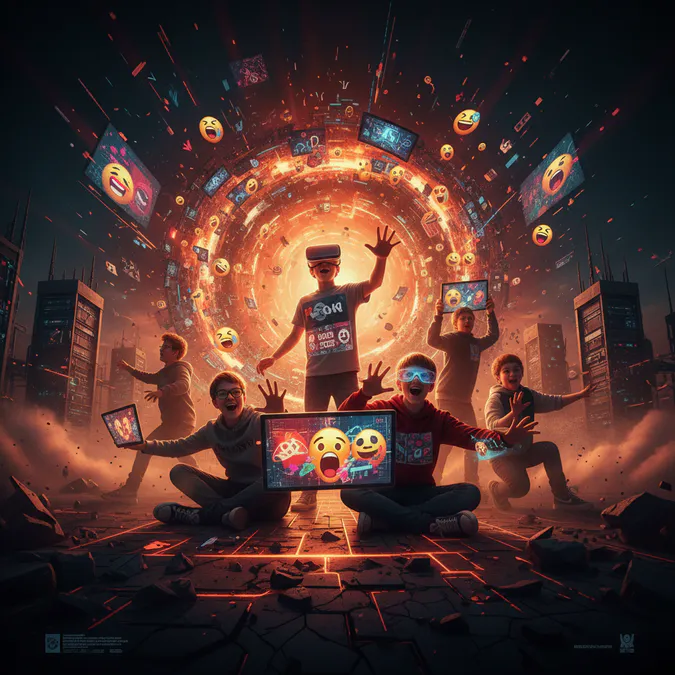
The appeal of absurdist humor to Gen Alpha lies in its rejection of traditional logic and meaning-making. These young users find comfort and entertainment in content that doesn't follow conventional rules or attempt to make sense. The 67 memes phenomenon, which dominates TikTok feeds, exemplifies this trend perfectly. These memes often feature random numbers, bizarre imagery, and completely illogical connections that somehow resonate deeply with younger audiences.
This generation's sense of humor reflects their lived experience in an increasingly chaotic world. Rather than seeking escape through coherent narratives, they embrace the chaos itself, finding humor in the absurdity of existence and the randomness of internet culture.
Millennials and Gen Z Finding Comfort in Absurdity
While Gen Alpha has grown up with absurdist humor, millennials and Gen Z are discovering comfort in these trends as well. For these older generations, the appeal is somewhat different. Many millennials and Gen Z members are experiencing unprecedented levels of stress, anxiety, and uncertainty about the future. Traditional forms of humor and entertainment often feel insufficient for processing these complex emotions.
Absurdist humor provides a unique form of relief. By embracing nonsensical content and chaos culture, millennials and Gen Z can temporarily escape the pressure to make sense of an increasingly complex world. There's a liberating quality to content that deliberately rejects logic and meaning. It allows audiences to turn off their analytical minds and simply exist in the moment without judgment or expectation.
Moreover, absurdist humor creates a sense of community among those who "get it." Understanding and appreciating nonsensical memes requires a certain cultural literacy that bonds users together. This shared understanding creates in-groups and fosters connection among people who might otherwise feel isolated.
The Psychology Behind the Trend
Psychologists and cultural analysts have noted that the rise of absurdist humor on social media reflects broader psychological and social trends. In an era of information overload, algorithmic manipulation, and constant connectivity, absurdist content offers a form of cognitive relief. The brain doesn't have to work to extract meaning or follow a logical narrative.
Additionally, absurdist humor serves as a coping mechanism for dealing with real-world chaos. When external circumstances feel unpredictable and beyond control, embracing internal absurdity can feel empowering. It's a way of saying, "If the world doesn't make sense, why should our entertainment?" This sentiment resonates deeply with audiences navigating the complexities of modern life.
The trend also reflects a generational rejection of corporate authenticity and polished content. Absurdist memes are often deliberately low-quality, poorly edited, and nonsensical—the opposite of the carefully curated content that dominated earlier social media eras. This anti-aesthetic approach resonates with audiences tired of influencer culture and manufactured authenticity.
How Platforms Are Adapting to Social Media Trends
Social media platforms, particularly TikTok, have recognized the dominance of absurdist humor and are adapting their algorithms and features accordingly. Content creators who produce nonsensical, chaotic videos are seeing increased engagement and reach. The platform's algorithm has learned to identify and promote content that resonates with users' preferences for absurdist humor.
This algorithmic shift has created a feedback loop. As absurdist content gets promoted more frequently, more creators produce it, and audiences consume more of it, further reinforcing the trend. Platforms are essentially amplifying what audiences already want to see.
Implications for Content Creators
For content creators looking to succeed in 2026, understanding and engaging with absurdist humor trends is increasingly important. However, this doesn't mean every creator should abandon their existing style. Instead, successful creators are finding ways to incorporate elements of chaos culture and absurdist humor into their content while maintaining their unique voice.
Creators who can authentically engage with these trends—without appearing forced or out-of-touch—are seeing significant growth. The key is understanding the underlying appeal of absurdist humor and finding ways to tap into that sensibility while creating content that aligns with their brand and audience.
Experimentation is crucial. Creators should test different approaches to absurdist content, pay attention to what resonates with their audience, and iterate accordingly. The most successful creators in this space are those who treat absurdist humor as a genuine form of expression rather than a trend to exploit.
Marketing and Brand Implications of Social Media Trends
Brands and marketers face a unique challenge in 2026. Traditional advertising approaches often feel at odds with the absurdist humor dominating social media. However, some forward-thinking brands are finding success by embracing chaos culture in their marketing efforts.
Brands that attempt to co-opt absurdist humor without genuine understanding often come across as inauthentic and cringey. Younger audiences are particularly adept at detecting when corporations are trying too hard to seem relatable. The most successful brand campaigns are those that either genuinely embrace absurdist sensibilities or stay true to their established brand voice without forcing trends.
For brands targeting Gen Alpha, Gen Z, and millennials, understanding the appeal of absurdist humor is essential for developing effective marketing strategies. This might mean taking more creative risks, embracing imperfection, and allowing for more spontaneity in branded content.
The Future of Social Media Humor
As we move deeper into 2026 and beyond, absurdist humor and chaos culture are likely to remain dominant forces on social media. However, the specific manifestations of these trends will continue to evolve. What counts as absurdist humor today might feel conventional tomorrow as the internet's collective sense of humor continues to shift and develop.
The underlying appeal of absurdist content—its rejection of traditional logic, its liberating quality, and its community-building potential—suggests that some form of this trend will persist. However, the specific memes, formats, and platforms that dominate may change significantly.
Key Takeaways
Absurdist humor and chaos culture have become dominant forces on social media in 2026, particularly on platforms like TikTok. Gen Alpha has embraced this trend as a natural expression of their digital-native sensibilities, while millennials and Gen Z are finding comfort and community in nonsensical content. The appeal of absurdist humor reflects broader psychological and social trends, including information overload and the desire for authentic, unpolished content.
For creators and brands, understanding and engaging authentically with these trends is increasingly important for success. However, forced attempts to co-opt absurdist humor often backfire. The most successful approach is to either genuinely embrace these sensibilities or maintain authentic brand voice without forcing trends. As social media continues to evolve, absurdist humor will likely remain influential, though its specific manifestations will continue to change.
FAQ
What are the main social media trends of 2026?
In 2026, the main social media trends include the rise of absurdist humor and chaos culture, particularly among Gen Alpha, Millennials, and Gen Z.
Why is absurdist humor popular?
Absurdist humor is popular because it offers a form of relief from the complexities of modern life, allowing audiences to embrace chaos and find community in shared understanding.
How can brands engage with absurdist humor?
Brands can engage with absurdist humor by authentically incorporating elements of chaos culture into their marketing strategies without appearing forced or inauthentic.
For further insights, check out this article on social media strategies.