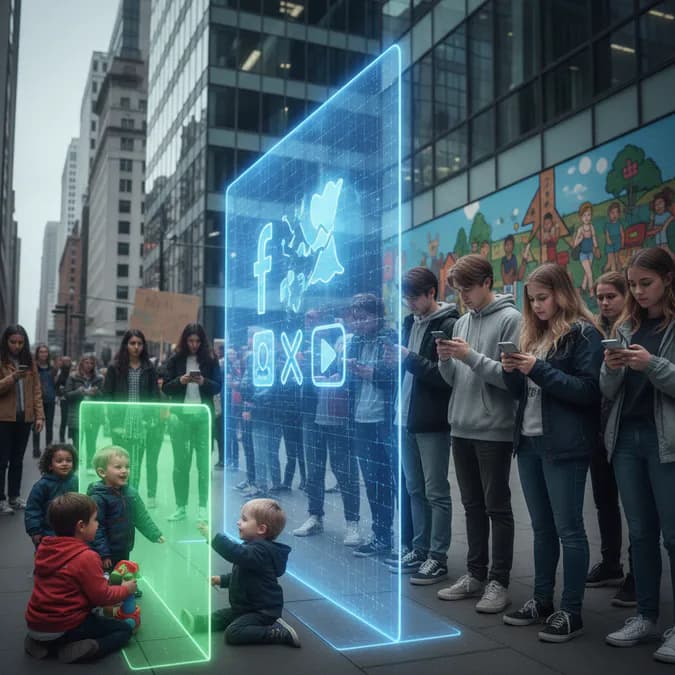
In 2026, millions of children will face social media bans aimed at protecting them from various harms. These social media bans are designed to address growing concerns about the negative effects of social media on young users. Research indicates that social media can contribute to mental health issues, cyberbullying, and exposure to inappropriate content. A study by Brookings highlights that children are particularly vulnerable to these risks, leading to calls for stricter age restrictions. This article explores the reasons, challenges, and impacts of these social media bans.
Reasons for the Social Media Bans

The primary motivation behind these social media bans is the increasing concern over the negative effects of social media on children. Key reasons for implementing these bans include:
- Mental Health Concerns: Studies show a correlation between social media use and anxiety or depression among youth.
- Cyberbullying: With the rise of online harassment, many children face significant emotional distress.
- Inappropriate Content: Children can easily access harmful material that is not suitable for their age.
According to a report by OECD, the effectiveness of these social media bans will largely depend on how well they are enforced and the cooperation of social media platforms. The societal shift towards prioritizing child safety online is evident, as a survey by Ipsos revealed that a majority of adults support age restrictions on social media.
Enforcement Challenges of Social Media Bans
While the intention behind these social media bans is clear, enforcing them presents numerous challenges. Governments and social media companies must navigate complex issues, including:
- Age Verification: Accurately verifying the age of users is a significant hurdle. Many platforms currently lack robust systems to ensure compliance with age restrictions.
- Global Disparities: Different countries have varying laws and enforcement capabilities, complicating a unified approach.
- User Resistance: Many children and teenagers may find ways to circumvent age restrictions, such as using false information to create accounts.
Experts emphasize that without effective enforcement mechanisms, the intended benefits of social media bans may not be realized. Stakeholders must collaborate to develop solutions that address these enforcement challenges.
Potential Impacts of Social Media Bans
The implications of these social media bans could be far-reaching, affecting not just children but also parents, educators, and society at large. Potential impacts include:
- Reduced Access to Information: Children may miss out on educational content and social interactions that can be beneficial.
- Increased Parental Control: Parents may need to take a more active role in monitoring their children's online activities.
- Shift in Social Dynamics: As children are restricted from using popular platforms, alternative forms of communication may emerge.
As we approach 2026, the conversation around social media bans for children is gaining momentum. While the intent is to protect young users from potential harms, the challenges of enforcement and the broader societal impacts must be carefully considered. Stakeholders, including parents, educators, and policymakers, will need to collaborate to navigate this evolving landscape effectively.
Key Takeaways
- Social media bans in 2026 aim to protect children from mental health issues, cyberbullying, and inappropriate content.
- Enforcement challenges include age verification, global disparities, and user resistance.
- The potential impacts of these bans may affect children's access to information and shift social dynamics.
Frequently Asked Questions (FAQs)
1. What are the main reasons for implementing social media bans in 2026?
The main reasons include mental health concerns, cyberbullying, and exposure to inappropriate content.
2. How will these bans be enforced?
Enforcement will require robust age verification systems and cooperation from social media platforms.
3. What impacts might these bans have on children?
Potential impacts include reduced access to beneficial information, increased parental control, and a shift in social dynamics.
Conclusion
As we approach 2026, the conversation around social media bans for children is gaining momentum. While the intent is to protect young users from potential harms, the challenges of enforcement and the broader societal impacts must be carefully considered. Stakeholders, including parents, educators, and policymakers, will need to collaborate to navigate this evolving landscape effectively.